Stop Your Dog Lunging in the Elevator
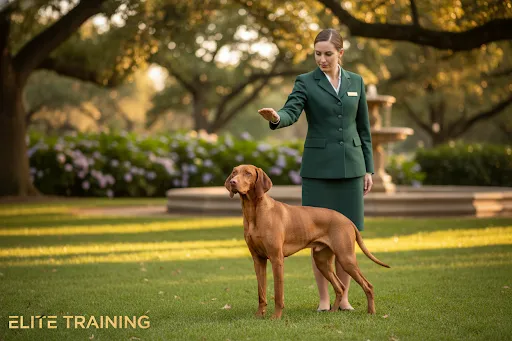
For dogs living in Manhattan, Brooklyn Heights, and DUMBO, the hardest part of their daily walk often occurs before they ever step outside.
The journey from your 18th-floor apartment to the sidewalk is a high-stress sensory gauntlet: narrow carpeted hallways with sudden acoustic reverberation, chiming elevator doors opening directly in front of unfamiliar dogs, crowded vestibules, and busy concierge lobbies filled with delivery couriers and luggage carts.
In working canine ethology, we call these confined areas High-Conflict Pressure Points. When dogs are forced into tight spaces with zero flight radius, natural avoidance instincts are stripped away. What owners often label as “aggression” or “stubbornness” is usually acute trigger stacking and defensive barrier frustration.
Here is a master training blueprint to transform your high-rise dog from an anxious, reactive puller into a poised, co-op-compliant urban ambassador.
1. The Threshold Pause: Breaking Corridor Anticipation
Most corridor reactivity begins inside your own apartment. The moment your dog hears the jingle of their leash, adrenaline spikes. They burst through your front door, pulling tension into the leash and entering the shared hallway in an elevated neurological state of fight-or-flight arousal.
To break this feedback loop, implement The 3-Second Threshold Pause:
- Place your dog in a relaxed “Sit” two feet inside your apartment doorway.
- Crack the front door open six inches. If your dog breaks their sit or creeps forward, quietly shut the door.
- Only when your dog offers soft eye contact and remains seated do you open the door fully.
- Give your release cue (e.g., “Let’s Go”). You step through the threshold first; your dog follows calmly behind your heel.
By claiming the doorway threshold, you signal to your dog that you are evaluating environmental safety, relieving them of the perceived burden of defending the hallway.
2. Elevator Protocol: Managing The Tightest Space in NYC
Elevator vestibules are responsible for more landlord disputes and co-op pet committee complaints than any other urban scenario. The sudden opening of metal doors leaves dogs with zero visual buffer. If another dog steps out three feet in front of them, an explosive lunge is almost inevitable.
- Never Stand Centered in Front of Doors: Always position yourself and your dog 6 to 8 feet back from the elevator doors, standing against the side wall at a 45-degree angle. This provides a clear sightline and a 6-foot safety buffer when the elevator opens.
- The “Behind” or “Middle” Positioning: Condition your dog to stand directly between your calves (“Middle”) or immediately behind your back leg (“Behind”). Your body acts as a physical visual shield. When neighbors or children enter the elevator, your dog remains shielded in a protected pocket rather than exposed at the front of the leash.
- The “Look Away” Desensitization: When the elevator chimes and the doors slide open, immediately click and reward your dog for turning their head toward you, rather than staring fixated into the opening elevator shaft.
3. Lobby Neutrality and Neighbor Greeting Rules
A luxury building lobby is a shared professional space. Having a dog that lunges toward the concierge desk, jumps on neighbors in business attire, or barks at luggage carts causes immense stress for building staff and fellow residents alike.
Rule 1: Eliminate the “Say Hello” Habit
Allowing your dog to greet every person and dog they pass on a 6-foot leash conditions extreme frustration. When they are later prevented from greeting someone, that frustration erupts into barking and lunging. Adopt the Pack Neutrality Standard: the goal of a city dog is not to be a social butterfly with every stranger; it is to remain completely calm and neutral to the existence of surrounding humans and dogs.
Rule 2: Coordinate With Your Building Staff
Speak with your door attendants and concierge team. Ask them to ignore your dog initially rather than offering high-pitched verbal baby talk and frantic petting. When building staff treat your dog with calm, matter-of-fact respect, your dog learns that the lobby is a quiet zone, not a high-arousal play park.
4. The Biological Reset: Why Mountain Trails Cure Lobby Stress
Corridor and elevator reactivity is fundamentally a symptom of Chronic Sensory Overload. Living in a 1,200-square-foot apartment surrounded by 24/7 noise, tight physical confinement, and restricted movement leaves city canines with baseline cortisol levels up to three times higher than their suburban or rural counterparts.
When a dog spends a full day on our Catskill Mountain expeditions, their entire nervous system resets.
Six hours of wide-open alpine trails, deep scent-tracking through balsam fir forests, and forward-motion pack dynamics drain accumulated physical tension. When your dog returns to Manhattan in our custom Sprinter, their mental reservoir is filled with authentic biological fulfillment.
They step off the elevator, walk through the lobby, and settle onto their bed with total composure—not because they were corrected, but because their primal needs have been completely met.